

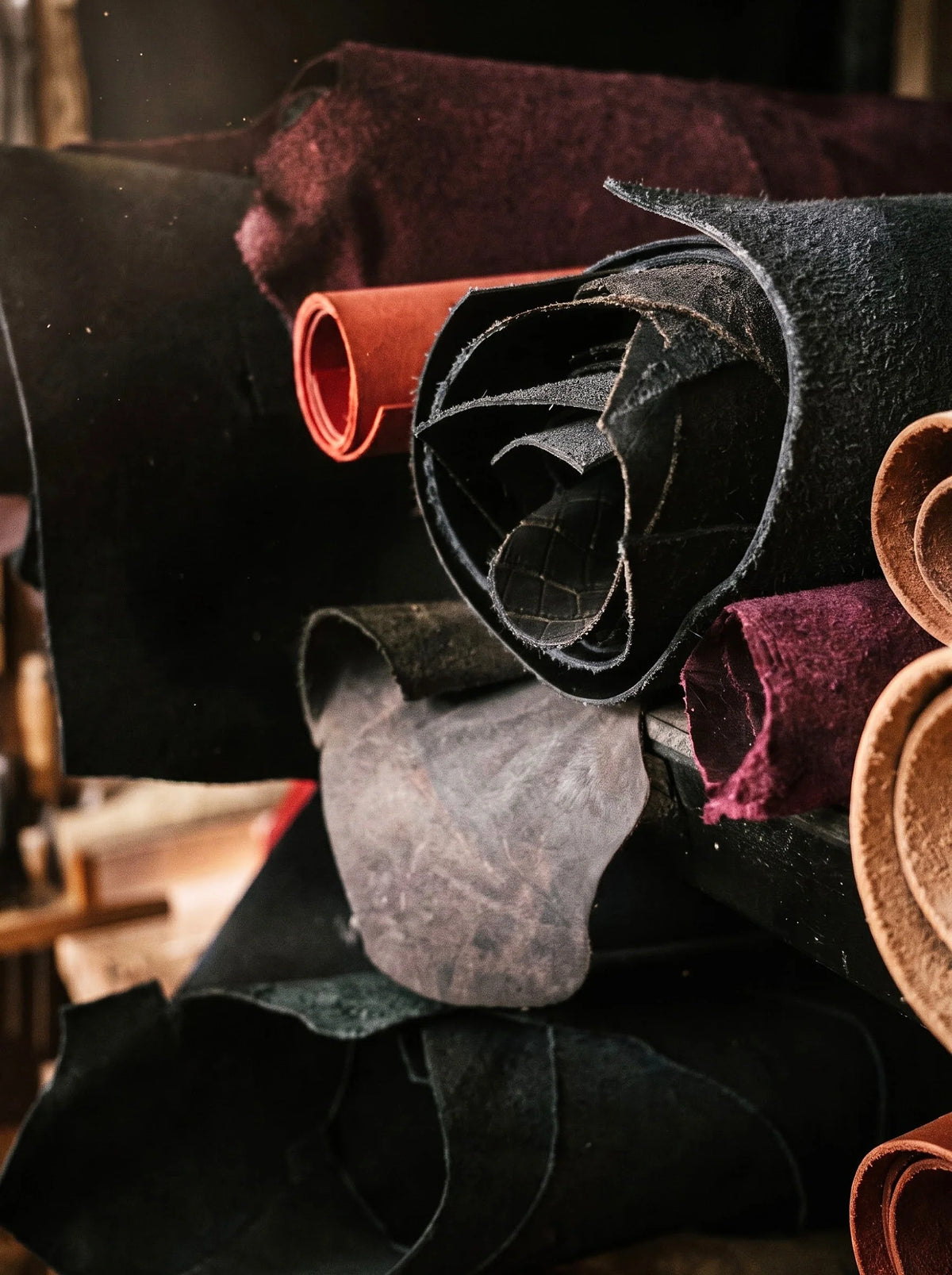
What Is Full-Grain Aniline Leather? A Buyer’s Guide to Natural Character & Lasting Quality
When shopping for a leather wallet or laptop sleeve—especially during the busy holiday gifting season—it is easy to get lost in labels. Terms like genuine leather, top-grain, full-grain, and aniline appear across product listings, yet few brands explain what they actually mean for how a piece looks, feels, and ages in your pocket.
At Koko Leather, every handmade wallet and MacBook cover starts with full-grain aniline leather. Understanding those two words makes it much easier to tell the difference between an accessory built to earn character over years of daily carry and one coated to hide lower-grade material.
1. What "Full-Grain" Means for Strength and Texture
Leather comes from layered animal hide, and the outermost layer—just beneath the hair—contains the tightest, strongest fiber structure.
- Full-grain leather keeps that natural outer surface intact. It has not been sanded, buffed, or embossed to erase minor blemishes, which preserves the hide’s natural strength and breathability.
- Top-grain leather has its outermost surface lightly sanded or buffed to create a more uniform appearance, often followed by a synthetic finish coat.
- Genuine or bonded leather typically comes from lower split layers of the hide or leftover leather fibers bound together with adhesives and heavy surface coatings.
Because full-grain leather leaves the strongest fibers undisturbed, a well-stitched wallet holds its shape around your cards and cash without stretching out prematurely or peeling at the fold.
2. What "Aniline" Means for Color and Patina
If full-grain describes the strength of the hide, aniline describes how it is colored.
Aniline leather is dyed all the way through using transparent, soluble dyes rather than opaque surface paints or heavy plastic pigments. Because the dye sinks into the pores without sealing them shut:
- Natural markings stay visible: Subtle grain variations, tiny creases, and tone shifts remain part of the surface, meaning no two wallets look identical.
- The hand-feel stays warm and supple: Instead of feeling slick or plasticky, the leather feels soft and organic from day one.
- Patina develops naturally: Over months of handling, exposure to everyday friction, light, and natural oils gradually deepens the color and adds a soft sheen—a lived-in look often called patina.
An honest note on natural hides: Because aniline leather is not sealed beneath a heavy synthetic coating, it is more porous than pigmented leather. It is not waterproof or scratch-proof, and small surface marks are a normal part of how natural hides wear. Wiping away moisture promptly and conditioning sparingly when the leather feels dry helps preserve its suppleness.
3. Quick Comparison: Full-Grain Aniline vs. Standard Coated Leather
| Feature | Full-Grain Aniline Leather | Coated / Corrected-Grain Leather |
|---|---|---|
| Surface Layer | Intact natural outer grain | Sanded, buffed, or stamped |
| Coloring Method | Transparent dye absorbed into the hide | Opaque surface pigment or plastic film |
| Visual Appearance | Natural grain variation; every piece is unique | Uniform, factory-identical finish |
| How It Ages | Develops a rich patina over time | Resists early marks, but can crack or peel |
| Care Needs | Benefits from dry storage and occasional conditioning | Wipes clean easily, but cannot absorb conditioner well |
Note: “Full-grain” describes the leather’s surface, while “aniline” describes its finish. “Coated leather” covers a range of leather grades and finishes, so quality and durability vary.
4. What Else to Check Before You Buy or Gift Leather
Material is the foundation, but construction determines whether a wallet or sleeve holds up in daily use. Before choosing a piece for yourself or someone on your holiday list, check three details:
- Stitching construction: Look for neat, even seam lines. Traditional saddle stitching—where two needles pass a single thread through each hole from opposite directions—keeps a seam from unraveling even if a single stitch wears down over time.
- Edge finishing: Clean, smoothly burnished or finished edges prevent fraying where the wallet slides in and out of a pocket every day.
- Layout and dimensions: Match the silhouette to what you actually carry rather than buying extra bulk.
Explore Full-Grain Aniline Essentials at Koko Leather
For a lighter front-pocket carry

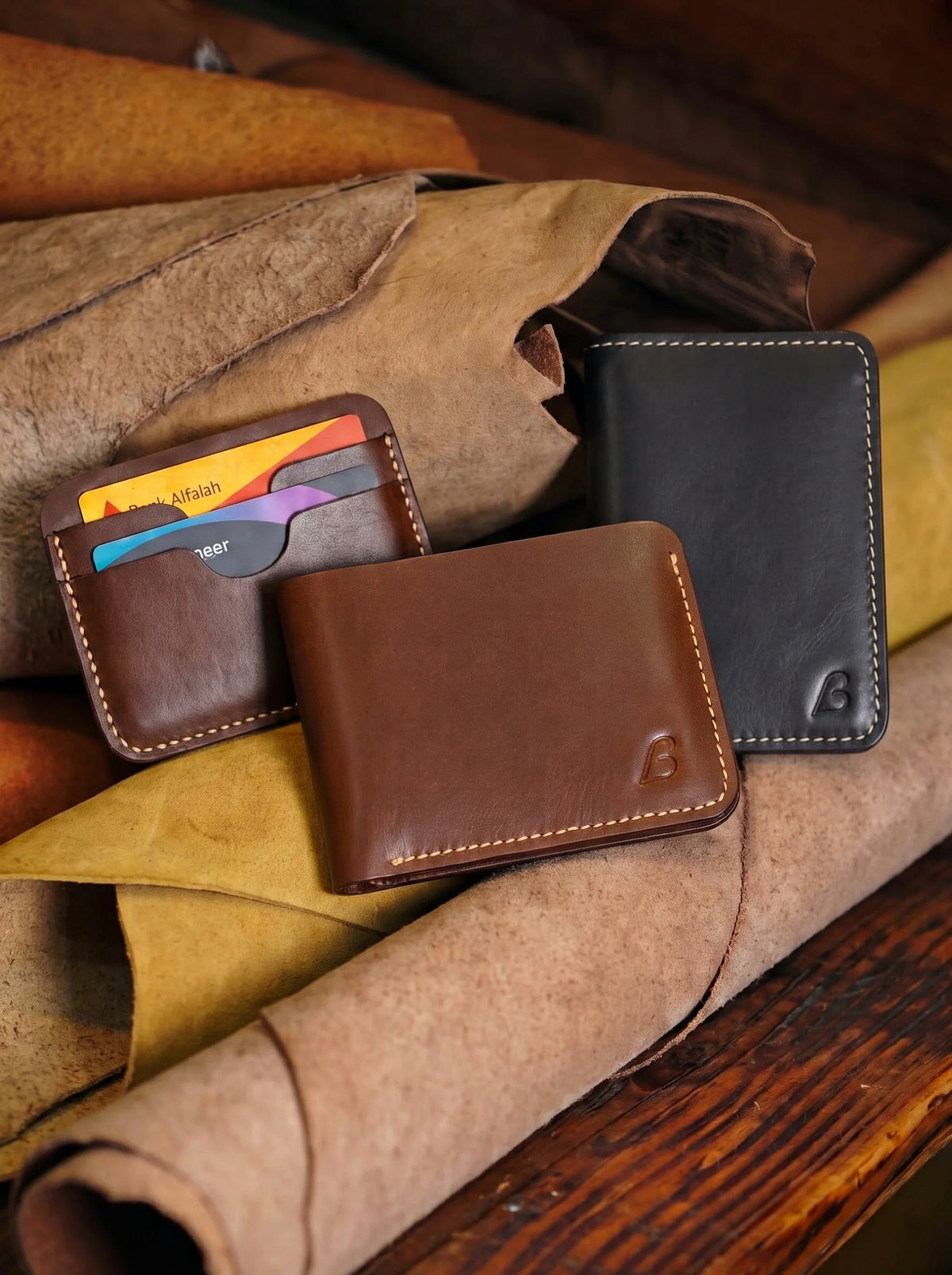
Our Horizontal Cardholder (4.1 × 3 in) holds roughly 4–5 cards plus folded cash, while the Vertical Cardholder with Button Closure organizes 10–12 cards in a compact upright profile.
For everyday cards and cash

The Slim Minimalist Bifold (available in Brown, Black, Beige, Burgundy, Olive Green, Green, and Turquoise) and the Slim Vertical Bifold offer structured card slots without unnecessary bulk.
For cash-focused carry

The Classic Big Cash Pocket Bifold pairs four card slots with a dedicated bill compartment.
For your workday setup
Our Slim Full-Grain Aniline Leather MacBook Cover (13 × 9.25 in, in Black or Brown) adds a tailored leather layer with brass snap closures for daily commutes and coffee-shop work sessions.
Always measure your exact laptop dimensions before ordering, and remember that a slim leather sleeve adds scratch protection rather than heavy drop or water protection.
Every Koko Leather piece is inspected before dispatch, ships from the U.S. within 1–3 business days with free shipping, and is backed by our 5-year warranty.
Frequently Asked Questions
Does full-grain aniline leather scratch easily?
Light surface scuffs can appear more easily on aniline leather than on heavily coated leather because the natural grain is uncovered. Many minor marks blend into the hide over time as natural handling oils and patina even out the finish.
How do I care for a full-grain aniline leather wallet?
Keep it out of prolonged rain or damp pockets, avoid overstuffing card slots beyond their intended capacity, and wipe dust or surface moisture with a clean, dry soft cloth. If the leather feels dry after extended use, test a small amount of neutral leather conditioner on an inconspicuous inner spot before applying lightly.
Why does my wallet look slightly different from the product photo?
Because full-grain aniline hides are never sanded or painted over, natural grain patterns and subtle tonal variations remain visible. Those small differences are proof that the leather is genuine full-grain hide rather than a synthetic print.

Leave a comment
This site is protected by hCaptcha and the hCaptcha Privacy Policy and Terms of Service apply.