

Article: Leather Wallet vs. Metal Cardholder: Which Is Better for Everyday Carry?
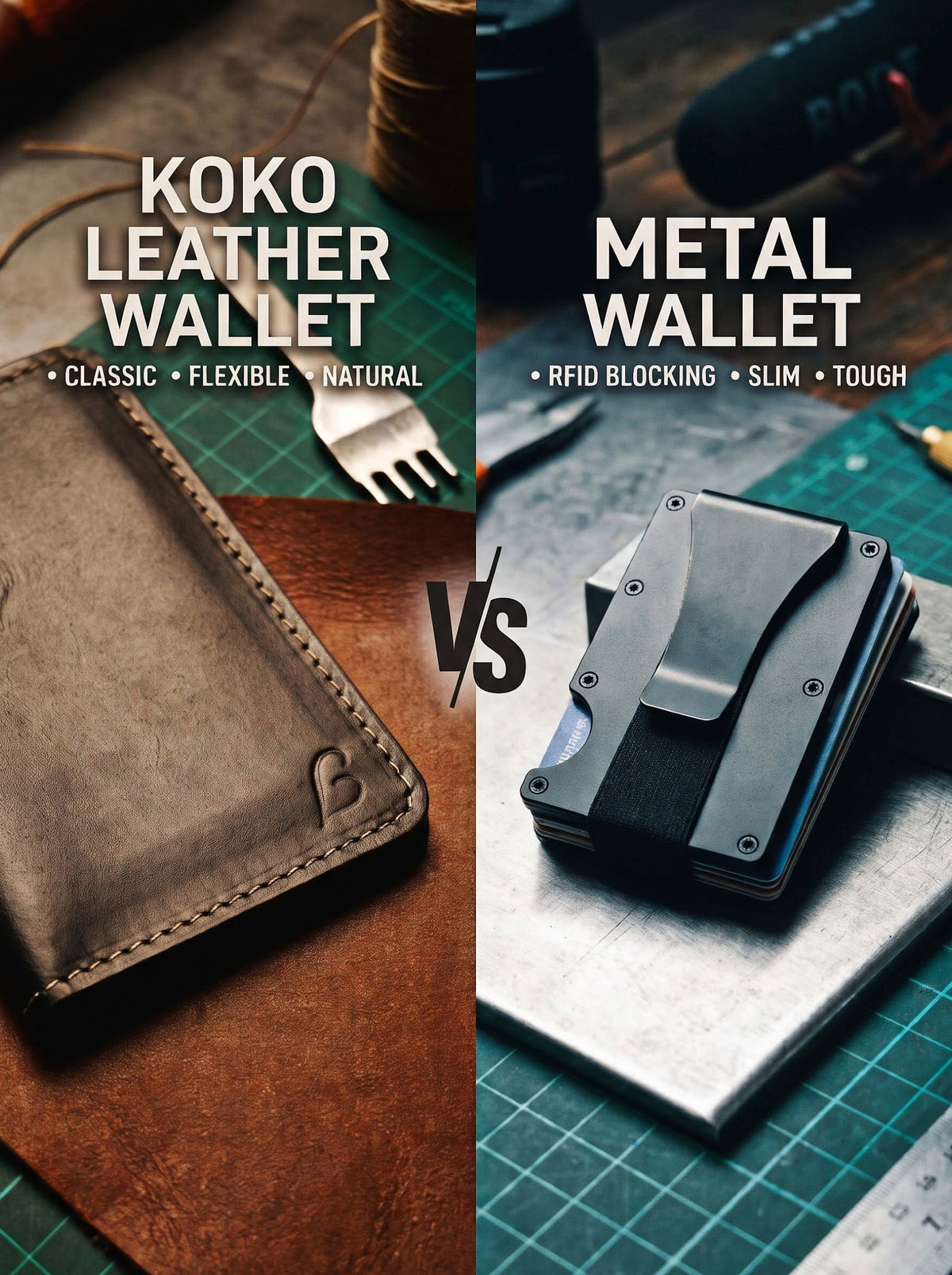
Leather Wallet vs. Metal Cardholder: Which Is Better for Everyday Carry?
Leather Wallet vs. Metal Cardholder: Which Is Better for Everyday Carry?
Choosing the best everyday carry wallet comes down to a fundamental clash of philosophies: organic craftsmanship versus rigid minimalism. When comparing a leather wallet vs metal wallet, both solve the same core problem—ditching the bulky, spine-tilting back-pocket brick—yet they deliver completely different daily experiences.
If you are weighing a leather cardholder vs metal cardholder, the right choice depends on how you dress, how much cash you carry, and what else shares your front pocket. Below is a complete breakdown of how both styles perform in real-world daily carry.
Quick Comparison: Leather Cardholder vs. Metal Cardholder
| Feature | Slim Full-Grain Leather Wallet | Metal Cardholder |
|---|---|---|
| Pocket Comfort | Flexible; comfort depends on thickness and load | Rigid; edges may press when sitting |
| Weight | Varies by size, leather thickness, and construction | Varies by material and mechanism |
| Durability & Aging | Can develop a rich patina with use | Rigid protection; may show scratches and scuffs |
| Card Access | Individual slots on many designs | Stack-fanning or mechanical ejector |
| Cash & Coin Storage | Billfold or quick-tuck slot, depending on design | Often an external money clip or elastic strap |
| RFID Protection | Available on models with blocking lining | Available on models designed for shielding |
| Phone Screen Safety | Soft edges can be gentler; grit can still cause scratches | Hard edges or trapped grit may mark a phone |
The Case for a Slim Full-Grain Leather Wallet
For generations, leather has anchored everyday carry gear for one simple reason: it works with the human body rather than against it. Modern designs have evolved far beyond thick bifolds, giving rise to the slim full-grain leather wallet and the minimalist leather cardholder—both available in designs suited to front-pocket carry.
1. Flexible Front-Pocket Comfort
Leather is a supple, organic material. A minimalist leather cardholder can flex with movement and soften with use, which may make sitting, driving, or crouching more comfortable than carrying a rigid design. How it breaks in depends on the leather, construction, and card load.
2. Patina That Develops With Age
Full-grain leather can develop a distinctive patina over time. Natural oils from your hands and daily friction gradually change its appearance, creating character unique to your routine. A well-made wallet can provide years of use with suitable care, although its lifespan depends on construction, conditions, and wear.
3. Practical Cash and Card Organization
If you carry physical currency alongside your cards, a leather wallet with a dedicated center pocket or billfold sleeve can keep bills neat and concealed rather than exposed on the outside. Check the layout to make sure it suits how much cash you usually carry.
4. Gentler Edges for Phones and Clothing
Soft, burnished leather edges can be gentler on nearby devices and trouser pockets than exposed hard corners. No wallet is entirely scratch-proof or risk-free, however: trapped sand, grit, and hardware can still cause marks. Carrying your phone separately is the safer choice.
The Case for a Metal Cardholder
Rigid minimalist wallets come in materials such as aluminum and titanium; some use carbon-fiber panels instead. These designs often favor a compact shell over the folds and stitching of a traditional leather wallet.
1. Rigid Everyday Protection
A metal cardholder can help protect cards from bending during everyday use. Its resistance to drops, pressure, and water depends on the material, construction, and any moving parts. Neither the shell nor the cards inside should be treated as indestructible, and water resistance should be checked for the specific model.
2. Compact Footprint
Many metal cardholders are only slightly larger than a standard credit card. Plates, elastic bands, or mechanical systems keep cards together in a compact stack, encouraging a lighter load without old receipts and unused loyalty cards.
3. RFID-Shielding Options
Some metal cardholders are designed to reduce contactless RFID and NFC communication. Shielding depends on the enclosure, openings, and card position, so a metal exterior alone is not a guarantee. Check the manufacturer's specifications for the model you choose.
4. Easy-to-Clean Surfaces
Metal surfaces are often easy to wipe clean, while leather generally needs more care around moisture. Finishes, fasteners, elastic bands, and ejector mechanisms can have their own care requirements, so follow the maker's guidance rather than assuming the entire wallet is waterproof.
Leather Wallet vs. Metal Wallet: 5 Key Factors Compared
When deciding between a leather wallet vs metal wallet for daily carry, pay close attention to how they differ across five practical categories:
1. Card Access Speed at Checkout
Leather: Individual card slots can make frequently used cards easy to reach. Access depends on slot placement, fit, and how tightly the wallet is packed.
Metal: Many elastic-band metal cardholders hold cards in a single compressed stack. To grab a middle card, you may need to push the stack out, fan the cards open, select one, and return the stack. Trigger-ejector models offer another way to access cards, though they introduce moving parts that may need maintenance.
2. Capacity and Flexibility
Choose capacity around the cards and cash you actually carry. Some minimalist leather designs accommodate a few cards and folded bills; others offer more slots. Metal cardholders also vary widely in capacity and minimum load. Follow each maker's recommended limits, since overfilling can stretch leather or strain bands and mechanisms.
3. Style and Versatility
Leather: A slim full-grain leather wallet offers a classic look that can work with both tailored clothing and weekend denim.
Metal: A metal cardholder offers a modern, industrial look. Whether it suits casual or formal settings is a matter of personal style.
4. Pocket Ecosystem Compatibility
Consider what else lives in your pockets. Hard wallet edges, keys, and trapped grit can mark nearby devices, while a softer leather design may reduce direct contact with hard surfaces. For either material, keep your phone separate when possible and avoid overcrowding your pockets.
5. Long-Term Maintenance
Leather may benefit from occasional conditioning with a suitable product, following the maker's advice for that leather and finish. Metal does not need leather conditioner, but screws, elastic bands, and ejector mechanisms may need attention or replacement as they wear.
How to Choose the Best Everyday Carry Wallet for Your Lifestyle
Still on the fence? Match your daily habits to the right profile below:
Choose a slim full-grain leather wallet or minimalist leather cardholder if:
- You prefer a flexible feel for everyday pocket carry.
- You want a design with space for your usual cards and folded cash.
- You prefer softer edges, while still keeping your phone protected separately.
- You appreciate classic craftsmanship and materials that develop character.
Choose a metal cardholder if:
- You prefer a compact, card-focused setup.
- You want a rigid shell to help protect cards from bending.
- You prefer a sleek, modern, industrial aesthetic.
- You favor easy-to-wipe surfaces and are comfortable maintaining any bands or moving parts.
Two Leather Picks for Your Everyday Carry
Prefer the feel and character of leather? These two handcrafted Koko Leather designs offer different ways to carry your daily essentials.
For Cards and Cash: Brown Slim Minimalist Bifold

Handcrafted from full-grain aniline leather, this slim reverse bifold has four interior card slots holding up to eight cards in total, plus an exterior bill slot for multiple bills. It measures 4.25 × 3.25 inches, making it a fitting choice for readers who want both card organization and space for cash.
Shop the Brown Slim Minimalist Bifold
For a Lighter Setup: Brown Horizontal Cardholder

For a pared-back everyday carry, this hand-stitched full-grain aniline leather cardholder holds approximately four to five cards and a few bills. Its 4.1 × 3-inch design suits readers who prefer carrying just the essentials.
Shop the Brown Horizontal Cardholder
Frequently Asked Questions
Do metal wallets scratch phones in the same pocket?
They can leave marks, depending on the edges, surface finishes, pressure, and any grit trapped between the items. A leather wallet is not a guarantee against scratches either. Keeping your phone in a separate pocket is the safer option.
Do I need a metal wallet for RFID protection?
No. RFID-blocking options are available in both leather and metal designs. Look for model-specific shielding information rather than assuming that either material guarantees protection.
How long does a full-grain leather cardholder last?
A well-made full-grain leather cardholder can last for years, but there is no universal lifespan. Stitching, leather quality, daily use, moisture exposure, and care all affect durability. Material labels alone do not establish how long a wallet will last.
What is the ideal thickness for a front-pocket wallet?
The ideal thickness depends on your clothing, pocket size, and comfort. Compare the wallet's loaded dimensions, not just its empty profile, and choose the slimmest design that comfortably holds your daily essentials without overfilling.
Which Wallet Earns a Spot in Your Pocket?
If you value a flexible feel, classic craftsmanship, and options for carrying both cards and cash, a slim full-grain leather wallet or minimalist leather cardholder is a strong everyday choice. With suitable care, it can develop a distinctive patina as you use it.
If you prefer a rigid shell and a compact, card-focused layout, a titanium or aluminum cardholder may suit you better. Compare the specific model's capacity, care requirements, and features rather than choosing on material alone.
Find your everyday essential in our handcrafted leather collection. Shop all wallets.

Leave a comment
This site is protected by hCaptcha and the hCaptcha Privacy Policy and Terms of Service apply.