

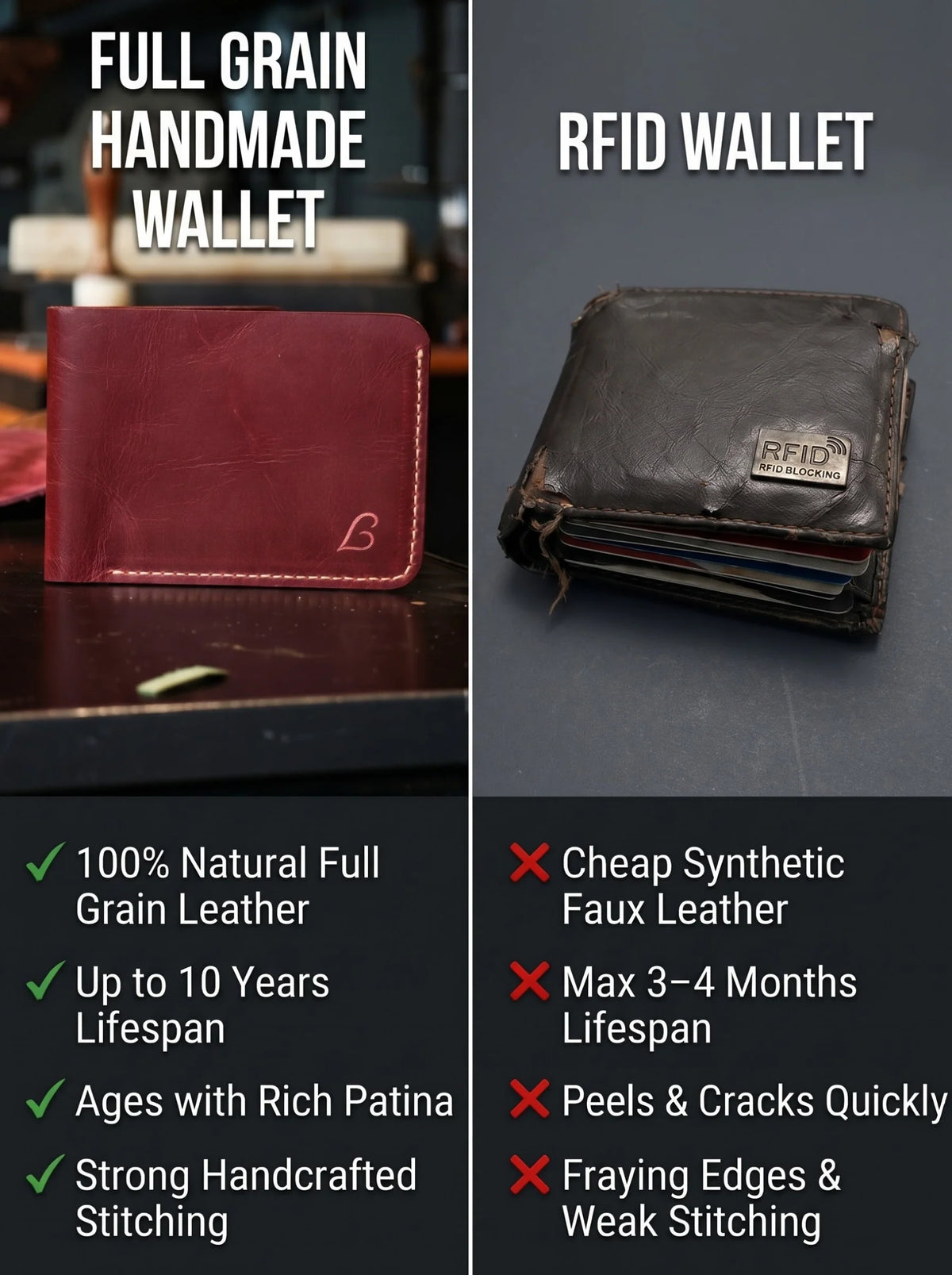
Do You Need an RFID-Blocking Wallet? Myths, Facts & Why Full-Grain Leather Wins
If you have shopped for a new wallet online lately, you have probably noticed that almost every listing leads with the same urgent selling point: military-grade RFID-blocking protection. It paints an alarming picture—walk through a busy airport, subway car, or coffee shop, and a thief with a hidden scanner can silently steal your credit card numbers right through your jeans.
It is an effective marketing hook, which brings thousands of shoppers to the same question: do you need an RFID blocking wallet, or is it just an unnecessary layer added to sell cheaper goods?
When you weigh an RFID wallet vs regular leather wallet, the real-world cybersecurity facts tell a very different story than the product ads. Even more importantly for leather enthusiasts, adding metallic shielding inside a wallet comes with real trade-offs in thickness, flexibility, and long-term durability.
How RFID Skimming Actually Works (And Why It’s Mostly a Myth)
To know whether you need shielding, it helps to understand what is actually inside your cards. Modern tap-to-pay credit and debit cards use NFC (Near Field Communication), a specialized subset of RFID technology. While older industrial RFID tags can be read from several feet away, payment cards are engineered specifically to prevent long-range reading.
Here is how the most common claims stack up against reality:
Myth: Thieves can scan your cards from across a crowded room.
Fact: NFC payment chips have a working range of less than 2 inches (typically 1 to 4 centimeters). A scanner would need to be pressed directly against your pocket and aligned flat against a single card—meaning a physical pickpocket would already be close enough to simply steal your wallet.
Myth: Intercepting a tap-to-pay signal lets criminals clone your card.
Fact: Unlike old magnetic stripes that broadcast static card numbers, modern EMV contactless chips and mobile wallets (like Apple Pay and Google Pay) use dynamic cryptographic tokenization. Every tap generates a unique, one-time transaction code. Even if someone managed to capture that signal, the code cannot be reused or turned into a cloned card.
Myth: Wireless wallet pickpocketing is a widespread crime.
Fact: Nearly all credit card fraud happens through online data breaches, phishing links, or physical skimmers attached to gas pumps and ATMs. Documented cases of criminals stealing usable payment data via wireless pocket-scanning are virtually nonexistent, and major US card issuers back contactless cards with zero-liability fraud protection.
Note: The only items that occasionally use older, unencrypted proximity signals are certain office building keycards or legacy transit passes. Even modern US passports already include built-in metallic shielding inside their covers, preventing them from being read while closed.
RFID Wallet vs. Regular Leather Wallet: The Hidden Trade-Offs
If RFID-blocking linings were weightless and invisible, adding them "just in case" would not hurt. In practice, however, blocking radio waves requires sandwiching sheets of Mylar foil, copper-nickel mesh, or carbon fiber weave between layers of leather.
When comparing an RFID wallet vs regular leather wallet, those hidden synthetic layers change how the wallet feels and ages:
| Feature | RFID-Blocking Wallet (Synthetic Lining) | Pure Full-Grain Leather Wallet |
|---|---|---|
| Pocket Profile | Thicker and stiffer due to internal foil or mesh sheets | Naturally sleek; molds flat to your body and card stack |
| Long-Term Durability | Foil linings crinkle, tear, and delaminate after months of bending | Pure hide fibers flex naturally and strengthen with age |
| Leather Quality | Often uses thin, split-grain leather to offset lining thickness | Uses dense, unsplit hides that resist stretching and tearing |
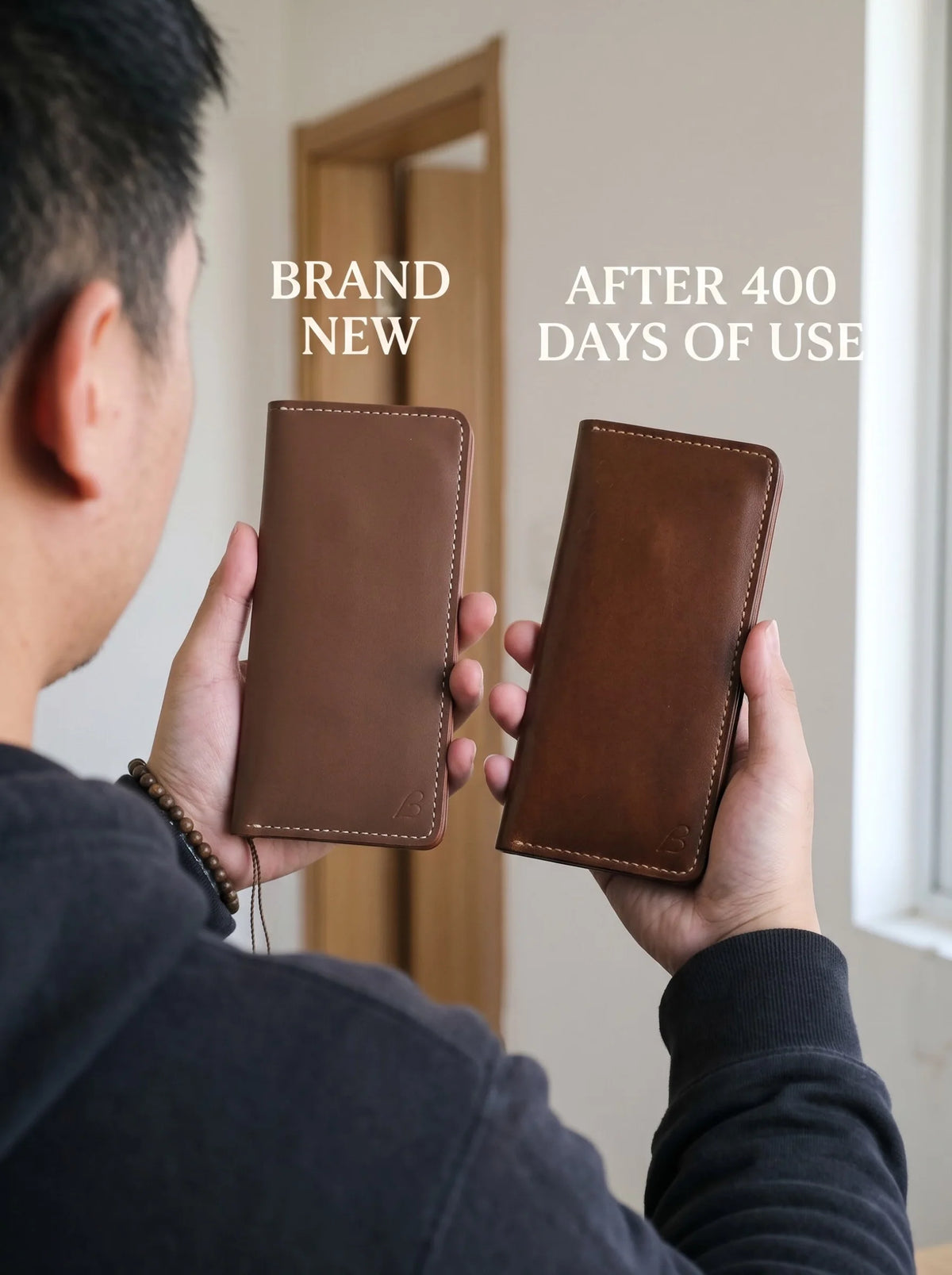
| Aging & Character | Synthetic layers trap moisture and cause outer leather to ripple | Develops a rich, natural patina over years of daily carry |
Because metallic mesh cannot stretch or breathe the way natural hide does, sitting on an RFID-lined bifold day after day eventually causes the inner barrier to crease and crack. Furthermore, many mass-market brands use "RFID protection" as a distraction from low-grade, corrected-grain leather that would otherwise wear out in a year.
Why a Full-Grain Leather Wallet Beats Gimmicks Every Time
When you strip away the synthetic foil linings, you let the leather do what it was meant to do. A full-grain leather wallet crafted from pure aniline hide keeps the strongest, tightest grain fibers intact. Instead of fighting against a stiff metallic insert, the leather gradually conforms to the exact shape of your cards and cash.
For anyone looking for a slim leather cardholder or minimalist bifold, skipping the RFID lining makes an immediate difference:
- Zero unnecessary bulk: Without extra layers of fabric and foil between every pocket, a 4-to-6 card holder stays thin enough to disappear in your front pocket.
- Better physical security: Carrying a slim wallet in your front pocket—rather than a thick bifold protruding from your back pocket—is the single most effective way to stop actual pickpockets.
- Decades of lifespan: Pure, unlined or leather-lined full-grain aniline leather absorbs natural oils from your hands, softening over time while holding tight stitching without peeling.
How to Choose the Best Everyday Leather Wallet
If your goal is to buy the best everyday leather wallet that looks sharp, carries comfortably, and protects your essentials, focus on craftsmanship rather than fear-driven tech buzzwords:
- Look for full-grain aniline or vegetable-tanned leather: Avoid vague labels like "genuine leather," which often disguise thin scraps glued over synthetic linings.
- Prioritize front-pocket dimensions: Choose a compact bifold or slim leather cardholder sized for the cards you actually use daily rather than old receipts.
- Inspect the stitching and edges: Heavy-duty waxed thread and clean, burnished edges ensure the pockets hold tension securely for years.
- Rely on smart digital habits: Enable instant push alerts on your banking app and use mobile wallet tap-to-pay for added biometric security.
Buying a wallet should be an investment in everyday utility and timeless materials, not a reaction to a manufactured problem. By skipping the bulky foil linings and choosing pure full-grain leather, you get a slimmer carry, better craftsmanship, and a piece that looks better five years from now than it did on day one.
Explore Koko Leather Wallets
Find your next everyday wallet. Tap either photo below to browse our full leather wallet collection.

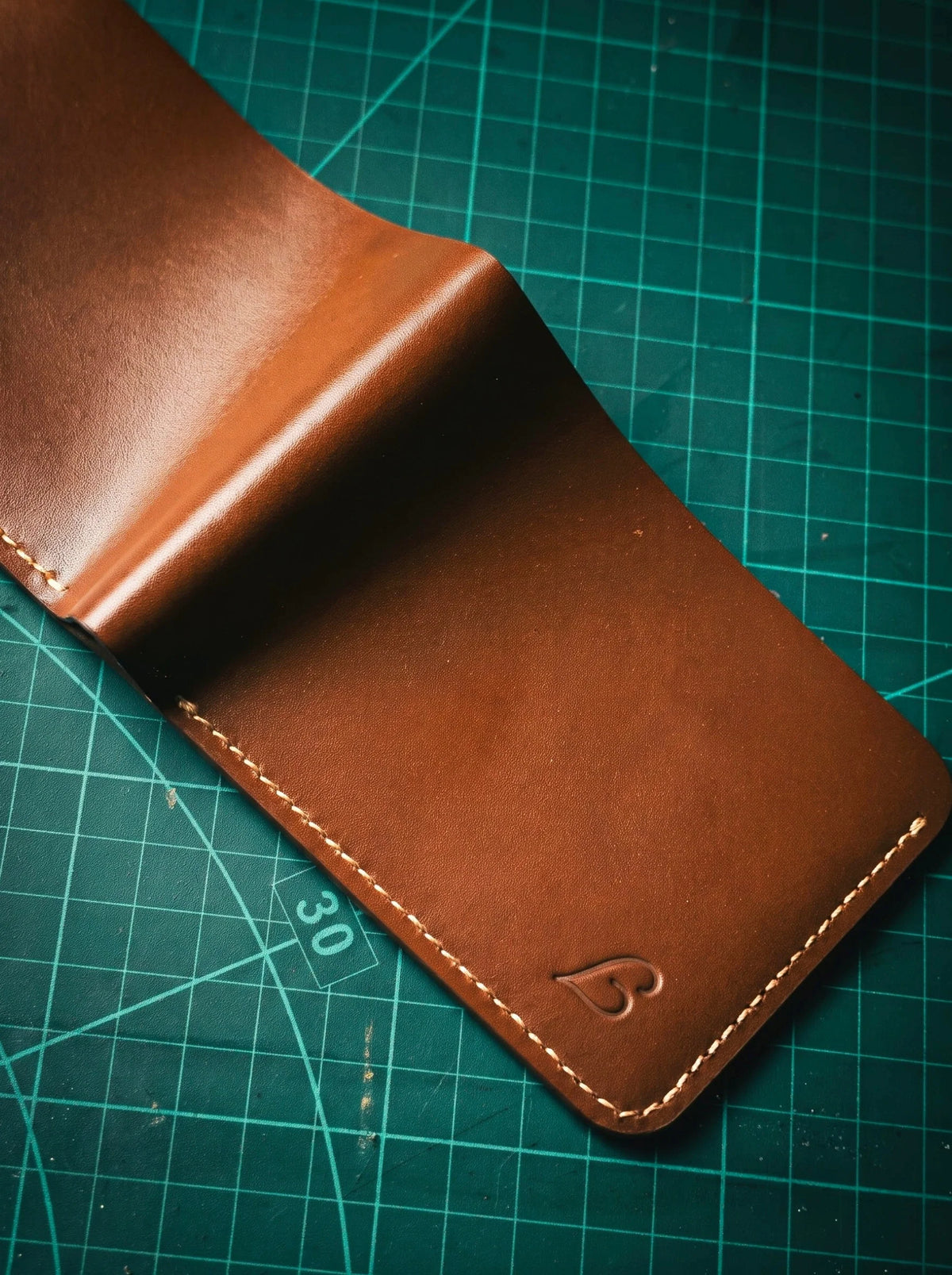
Brown Slim Vertical Bifold Wallet · Browse All Wallets

Turquoise Slim Minimalist Bifold Wallet · Browse All Wallets
Explore more wallet styles:

Leave a comment
This site is protected by hCaptcha and the hCaptcha Privacy Policy and Terms of Service apply.