

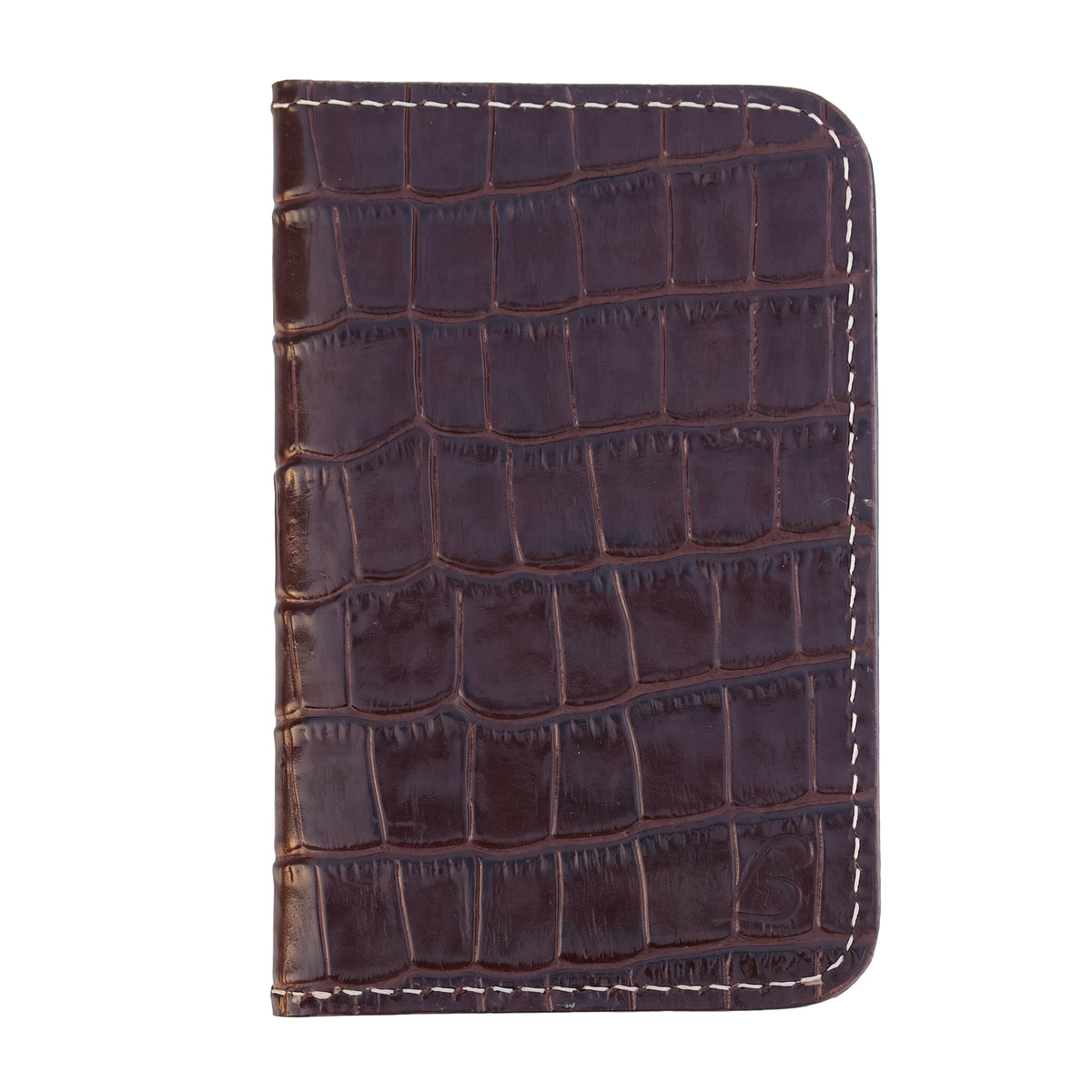
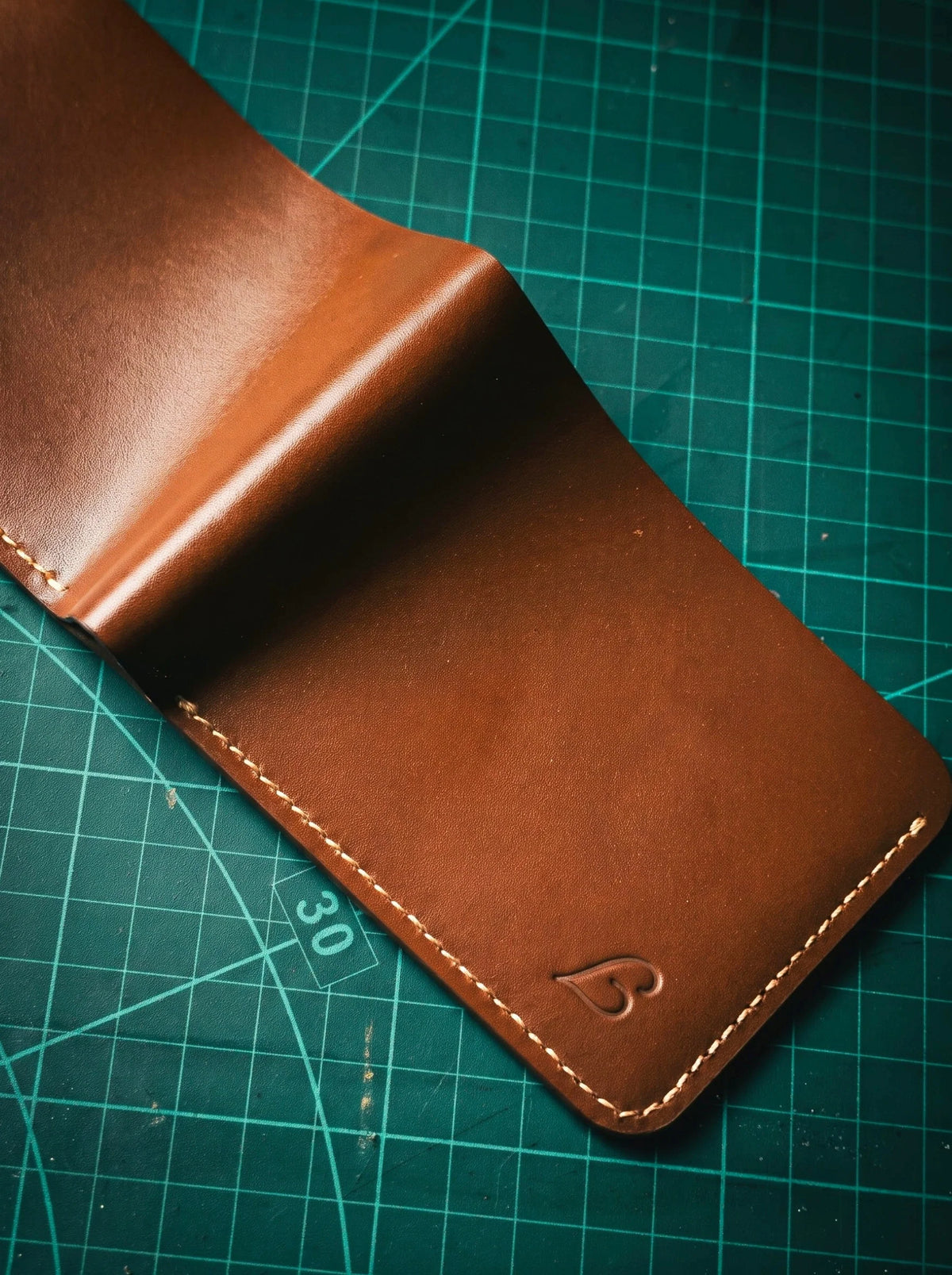
How to Break In a New Leather Wallet Without Overstretching
How to Break In a New Full-Grain Leather Wallet Safely (Without Overstretching)
Unboxing a brand-new handmade leather wallet is a great feeling—until you try to slide your cards in and realize the pockets feel like rigid armor. Whether you just picked up a classic bifold or a minimalist full-grain leather cardholder, some initial stiffness is normal.
Knowing how to break in a leather wallet properly helps it adapt to your daily carry without unnecessarily loosening the pockets. Rushing the process by cramming extra cards into tight slots can permanently stretch the leather and reduce card retention when you carry fewer cards.
Why Full-Grain Leather Starts Out Stiff
Full-grain leather is made from the top layer of the hide with its natural grain intact. Unlike corrected-grain leather, it hasn't been sanded down or buffed to remove natural imperfections.
The feel of a new wallet depends on the leather's thickness, tanning, finish, and construction. With regular use, the leather gradually flexes and adapts to your carry habits, while its surface can develop a distinctive patina.
Step-by-Step: How to Break In a Leather Wallet Safely
If you want to learn how to soften a new leather wallet while preserving its shape and stitching, slow and steady wins every time.
1. Load Only One Card Per Slot at First
When figuring out how to stretch leather wallet card slots without ruining their tension, restraint is your best tool. Start with one standard-thickness credit or debit card in each dedicated slot, following the maker's stated capacity. Avoid doubling up cards to force tight pockets open.
If a slot feels unusually tight, insert a card carefully without forcing it. If the card will not fit with gentle pressure, ask the maker for advice rather than stretching the pocket aggressively.
2. Let Normal Daily Carry Do the Work
Carry your wallet normally with a light, consistent card load. Everyday handling and gentle flexing allow the leather to adapt gradually. You do not need to add heat to speed up the process.
3. Flex the Spine Gently by Hand
New bifolds may spring open when placed on a table. Instead of sitting on your wallet or crushing it under heavy books—which can crease the leather unevenly—gently open and close it along its existing fold. Avoid bending it backwards, twisting it, or forcing the spine flat.
4. Apply a Suitable Leather Conditioner (If Needed)
Conditioner is not a necessary shortcut for breaking in a new wallet. If the leather feels dry, check the maker's care guidance and choose a product suitable for its specific leather and finish, especially for absorbent aniline leather.
Always patch test in a hidden area and allow it to dry before treating the whole wallet, as care products may change the color or finish. Follow the conditioner's application and drying instructions rather than assuming every product should be buffed immediately.
Less is more: avoid saturating the leather or repeatedly applying conditioner to force it to soften.
5. Give It Time With Normal Use
Full-grain leather doesn't break in overnight. With regular use, the wallet should gradually soften; timing varies by leather thickness, finish, construction, and use. Treat a few weeks as a rough guide, not a deadline, and prioritize secure card retention over forcing a looser fit.
What to Avoid When Softening a New Leather Wallet
Internet "life hacks" for speeding up leather break-in can cause lasting damage. Keep your wallet away from these shortcuts:
- Double-stuffing card slots early: Overstuffing can permanently loosen card slots. Stay within the maker's recommended capacity rather than adding extra cards to stretch the pockets.
- Soaking in water or steaming: Do not soak or steam a finished wallet to soften it. If it gets wet, let it dry naturally and follow the maker's care instructions.
- High heat sources: Avoid hairdryers, radiators, and direct dashboard sun. Let damp leather dry naturally away from direct heat.
- Kitchen oils and petroleum products: Avoid household oils and petroleum jelly unless recommended by the maker. Use care products appropriate for the wallet's leather and finish, and patch test first.
Safe vs. Risky Break-In Methods at a Glance
| Method | Approach | What to Watch For | Verdict |
|---|---|---|---|
| 1 Card Per Slot + Daily Carry | Allows gradual adjustment through normal use | Follow the maker's stated slot capacity | A sensible starting point |
| Gentle Hand Flexing | Open and close along the existing fold | Do not twist or bend backwards | Keep it gentle |
| Suitable Leather Conditioner | Care for dry leather when recommended | Patch test and follow product instructions | Not a break-in shortcut |
| Stuffing Extra Cards Per Slot | Forces the pockets wider | Can permanently loosen card retention | Avoid forced stretching |
| Water Soaking or High Heat | Attempts to force rapid softening | Can damage the leather or wallet structure | Do not use for break-in |
Frequently Asked Questions About Breaking In Leather Wallets
How long does it take to break in a full-grain leather wallet?
Allow time for gradual adjustment through everyday use. A few weeks can be a useful guide, but there is no guaranteed break-in period. Leather thickness, tanning, finish, construction, and your carry habits all affect how quickly a wallet softens.
How do you stretch leather wallet card slots without ruining them?
Start with one card per dedicated slot and let normal use ease the fit gradually. Stay within the maker's recommended capacity. Do not force a second card into a slot simply to stretch it, as the pocket may become too loose for a smaller card load.
Can you soften a new leather wallet overnight?
There is no reliable overnight shortcut. Gentle handling may ease the initial stiffness, but let the wallet adapt through normal use. Avoid soaking, heating, or over-stuffing it to force quick results.
Does a full-grain leather cardholder break in differently than a bifold?
A cardholder without a central fold has no spine to soften. Its break-in is mainly about the fit of the card pockets. A bifold also flexes along its central fold. Neither style is guaranteed to break in faster; the leather and construction matter.
Patience Pays Off With Real Leather
A well-made leather wallet can become a long-lasting everyday companion, but initial firmness alone is not proof of quality or durability. By resisting the urge to overstuff the pockets, you give the leather time to adapt to your carry habits while helping preserve its shape and card retention.
Find Your Next Everyday Wallet
Explore these two full-grain leather styles. Select a photo or product name to see more details.
Black & Red Two-Tone Leather Bifold Wallet

View the Black & Red Bifold Wallet
Brown Full-Grain Leather Horizontal Cardholder

View the Brown Leather Cardholder
Shop All Wallets to find your next everyday companion.

Leave a comment
This site is protected by hCaptcha and the hCaptcha Privacy Policy and Terms of Service apply.